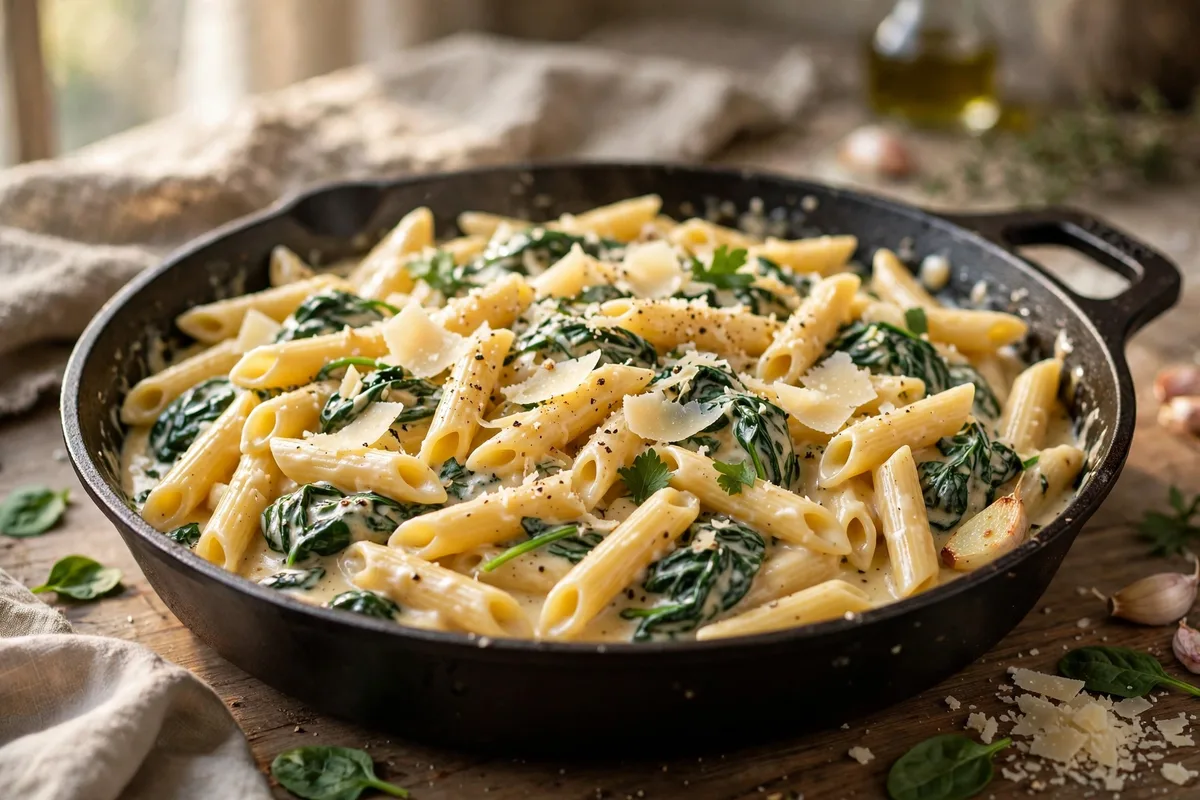
One-Pot Creamy Garlic Spinach Pasta (30 Minutes)
The search results for "creamy spinach pasta" are full of recipes that call themselves one-pot but are not. The freshest true one-pot version on page one is 225 days old, and it boils the pasta separately, then builds a blush tomato-cream sauce in a second pan. The rest are older: mozzarella and tomato versions from 264 days ago, and a vegan mushroom version more than three years old. None of them cooks the pasta directly in the sauce.
This version does exactly that. Short pasta simmers in a garlic-Parmesan cream sauce in a single pot, and the starch it releases thickens the sauce from the inside, so there is no roux, no flour, and no second pan of water. Fresh baby spinach goes in at the very end, off the heat, and wilts in about a minute. There is no tomato here, so the sauce stays pale and creamy, and the flavour is about the garlic and the Parmesan.
It is a meatless main dish built for busy weeknights: one pot, pantry staples plus one bag of spinach, and dinner on the table in about 30 minutes. Serve it on its own with a salad or bread, or as a side next to grilled chicken or salmon. All times below are estimates.
Recipe at a Glance
Prep Time: 10 minutes (estimate)
Cook Time: 20 minutes (estimate)
Total Time: 30 minutes (estimate)
Servings: 4
Difficulty: Easy
Equipment: large deep skillet or Dutch oven with a tight-fitting lid, wooden spoon, measuring cups and spoons, box grater or microplane for the Parmesan
Why This Recipe Works
Cooking the pasta in the sauce is the whole method. As penne or fusilli simmers, it sheds starch into the liquid, and that starch turns a thin mixture of broth and cream into a sauce that clings to the pasta, without flour and without a long reduction. The pasta also absorbs the garlic and Parmesan as it cooks, so the flavour runs through the dish instead of sitting on top.
The liquid ratio is set so the pasta finishes as the sauce reaches the right consistency: 3 cups of low-sodium vegetable broth plus 1 cup of heavy cream for 12 ounces of short pasta. Too much liquid and the sauce stays soupy; too little and the pasta sticks and scorches before it is tender. If the pan looks dry near the end, a splash of hot water fixes it without thinning the flavour.
The spinach goes in last for a reason: baby spinach wilts in about a minute in residual heat, and that is all it needs. Added earlier, it would overcook, turn dark, and shed water into the sauce, thinning the consistency the pasta starch built. A spoonful of lemon juice at the end keeps the rich sauce tasting bright instead of flat.
Ingredients
Pasta and liquid
- 12 oz penne or fusilli (about 3 1/2 cups dry)
- 3 cups low-sodium vegetable broth
- 1 cup heavy cream
Sauce
- 2 tbsp olive oil
- 2 tbsp unsalted butter
- 6 cloves garlic, thinly sliced or minced (about 2 tbsp)
- 1/2 tsp Italian seasoning
- 1/4 tsp red pepper flakes (optional)
- 1/4 tsp freshly grated nutmeg (optional, but recommended)
- 2 oz cream cheese, cut into small cubes
- 3/4 cup freshly grated Parmesan cheese, plus extra for serving
- 1 tbsp fresh lemon juice
Spinach and finish
- 5 oz fresh baby spinach (about 5 packed cups)
- 3/4 tsp kosher salt, plus more to taste
- 1/2 tsp black pepper
- 1/4 cup chopped fresh basil or flat-leaf parsley (optional)
A note on the ingredients: use freshly grated Parmesan, not pre-shredded. Pre-shredded Parmesan is coated in anti-caking starch, which keeps it from melting smoothly; it clumps in a cream sauce instead of dissolving into it. Grate a wedge on a box grater or a microplane before the pot gets hot. Use low-sodium broth, because the liquid concentrates as the pasta absorbs it, and regular broth can leave the dish too salty once the Parmesan goes in. Heavy cream is the right dairy here, not half-and-half, which is more likely to split when it simmers with lemon juice.
Instructions
- Before the pot gets hot, slice or mince the garlic, grate the Parmesan, cube the cream cheese, and rinse the spinach. The spinach goes in at the very end, so have it ready first.
- Heat the oil and butter in a large deep skillet or Dutch oven over medium heat until the butter melts and foams, about 1 minute. Add the garlic, Italian seasoning, and red pepper flakes if using, and cook for 1 minute, stirring constantly, until fragrant and just turning pale gold at the edges. Do not let it brown; browned garlic turns bitter.
- Pour in the broth and cream, scraping the bottom of the pan to release any garlic that has stuck. Stir in the salt and pepper, then add the cream cheese cubes and stir until they begin to soften.
- Add the pasta and stir so every piece is submerged. Raise the heat to medium-high, bring to a gentle boil, about 2 to 3 minutes, then reduce to medium-low for a steady, gentle simmer.
- Cover and cook for 10 to 12 minutes, lifting the lid to stir every 3 to 4 minutes. Stirring is not optional: the pasta sits in a thickening sauce, not a big pot of water, and the pieces on the bottom will stick if left alone. The pasta is done when tender with a slight bite in the centre, and the sauce coats the back of a spoon.
- Check a piece of pasta at 10 minutes. If it is still chalky in the middle, replace the lid and cook 2 minutes more. If the pan looks dry before the pasta is tender, add 1/4 cup of hot water. The sauce will look a little loose when the pasta first turns tender; it thickens as it stands, so do not overcook it.
- Remove the pot from the heat. Add the spinach in two handfuls, stirring after each, and let it wilt in the residual heat for about 1 minute. The leaves should turn bright green and collapse into the pasta. If the pot has cooled too much, set it back over low heat for 30 seconds, no more.
- Stir in the lemon juice and nutmeg, then add the 3/4 cup of grated Parmesan a handful at a time, stirring until each addition melts before adding the next. Cheese added off the heat keeps the sauce smooth; Parmesan in a boiling sauce can seize and turn grainy.
- Taste and adjust the salt and pepper. The sauce should coat the pasta in a thick, creamy layer, with the spinach spread through it rather than sitting in clumps. If it thickened too much while you added the cheese, stir in a tablespoon or two of hot water until it loosens.
- Serve immediately in warm bowls, topped with extra Parmesan and the chopped basil or parsley if using. This dish waits badly: the pasta keeps absorbing the sauce as it stands, so the window between perfect and too thick is about five minutes.
Expert Tips
- Stir on a schedule, not when you remember. Stir every 3 to 4 minutes during the covered simmer. Pasta in sauce sticks to the bottom far faster than pasta in water, and one stuck layer will scorch the whole dish.
- Use short pasta with ridges or twists. Penne and fusilli trap the sauce and cook evenly in about 12 minutes. Long pasta such as spaghetti cooks unevenly in a shallow pan, clumps, and is much harder to stir without breaking.
- Add the cheese off the heat, a handful at a time. Boiling heat makes Parmesan seize into grainy clumps; gentle residual heat melts it into a smooth, glossy sauce. If it does turn grainy, a splash of hot water and a vigorous stir will often bring it back.
- Do not overcook the spinach. One minute in residual heat is enough. Spinach cooked for five minutes turns dark, slimy, and watery, and its water thins the sauce. If you use mature spinach, strip out the thick stems first; they stay tough long after the leaves have wilted.
- Serve it the moment it is ready. Cream pasta thickens as it cools; this one is at its best within five minutes of coming off the heat. Warm the bowls with hot water while the pasta cooks so it does not cool the moment it is plated.
Variations and Substitutions
- Add mushrooms: slice 8 oz of cremini mushrooms and cook them in the oil and butter for 5 minutes before the garlic goes in, until they release their water and start to brown. They add an earthy depth that suits the garlic and Parmesan, and make the dish more substantial without meat.
- Add sun-dried tomatoes: stir in 1/3 cup of chopped oil-packed sun-dried tomatoes, drained, with the broth and cream. They bring a sweet, tangy note against the rich sauce, without the acidity of fresh tomatoes.
- Make it with chicken: sear 1 lb of thin-sliced boneless chicken breast or tenders in the oil and butter for 3 minutes per side before the garlic goes in, then set aside and slice. Return it to the pot with the spinach; it should reach 165 degrees F (74 degrees C) before serving.
- Use kale instead of spinach: swap in 4 cups of chopped lacinato kale, stems removed, and add it with the pasta; kale needs 8 to 10 minutes of simmering to soften. The dish will be heartier, but the method and timing stay the same.
- Gluten-free pasta: use a gluten-free penne or fusilli made from rice or corn, and check it at 8 minutes, because it softens faster and can turn mushy in sauce. Add an extra 1/4 cup of broth at the start, since it absorbs liquid differently and the sauce thickens fast.
Serving Suggestions
This pasta is a full meal on its own for four, and it needs very little next to it. A simple green salad with a lemon vinaigrette is the best partner: the acid cuts through the richness of the cream sauce, just as the lemon juice in the pasta does. Crusty bread or garlic bread is the other obvious choice, there to catch the sauce left in the bowl.
For a larger table, it works as a side next to grilled chicken, pan-seared salmon, or roasted shrimp. Keep the protein simple and lightly seasoned: the pasta already carries the garlic and the Parmesan, and a heavily seasoned main will fight with it. Chilled white wine, such as a Pinot Grigio, suits the creamy sauce; sparkling water with lemon is a good alcohol-free option.
Storage and Reheating
Cool for no more than 30 minutes, then refrigerate in an airtight container for up to 3 days. The spinach will darken a little and the sauce will thicken as the pasta absorbs it. This dish does not freeze well: the cream sauce separates when thawed and the spinach turns watery, so make only what you plan to eat within a few days.
Reheat one portion in a skillet over low heat with 2 to 3 tablespoons of milk or vegetable broth, stirring gently for 3 to 4 minutes until hot all the way through. Add fresh Parmesan at the end to bring the sauce back. Avoid the microwave: it heats unevenly and can make the Parmesan seize. Reheat leftovers once only, and eat them the same day.
Frequently Asked Questions
Can I use frozen spinach instead of fresh? Yes, with different handling. Thaw 10 oz of frozen chopped spinach, then squeeze it dry in a clean kitchen towel until no more water comes out. Stir it in off the heat like the fresh spinach. Skip the squeezing and its water will thin the sauce noticeably.
Why is my sauce grainy? The usual cause is Parmesan added while the sauce was still boiling, or pre-shredded Parmesan with anti-caking starch. Add the cheese off the heat, a handful at a time, and use freshly grated Parmesan. A splash of hot water and a vigorous stir will often smooth it out.
Can I use milk instead of heavy cream? You can, but the sauce will be thinner and more likely to split once the lemon juice goes in. Whole milk is the best substitute; use 1 cup and add an extra ounce of cream cheese to help it thicken. Keep the simmer gentle and add the lemon juice off the heat.
What pasta shapes work best? Short shapes with ridges or twists: penne, fusilli, rotini, or medium shells. They cook evenly in about 12 minutes, hold the sauce, and are easy to stir without breaking. Avoid long pasta, which clumps and cooks unevenly, and tiny shapes such as orzo, which absorb liquid too fast and turn the dish into a porridge.
Can I make this ahead of time? Not really; it does not improve with waiting. The pasta keeps absorbing sauce as it stands, so a batch made an hour ahead will be thick and dry by serving time. For a head start, measure and prep everything in advance, then cook the pasta fresh.
Is this recipe vegetarian? Yes, as written, it contains no meat. Two things to check for strict vegetarians: Parmesan is traditionally made with animal rennet, so look for a vegetarian Parmesan-style cheese, and check that your vegetable broth is certified vegetarian, since some broths contain flavourings of animal origin.
Nutrition
The figures below are estimates per serving, for 4 servings, calculated from standard values for the listed ingredients. They are not lab-tested, and the actual numbers will shift a little with the brands you use and how generous the Parmesan topping is. Per serving: about 750 calories, 46 g total fat (24 g saturated fat), 65 g carbohydrates (5 g fibre, 4 g sugars), 19 g protein, and about 640 mg sodium. The estimate is internally consistent: 65 g of carbohydrate and 19 g of protein give about 336 calories, and 46 g of fat gives about 414 calories, totalling about 750 calories.
Related Recipes
If this one-pot pasta worked for your weeknight, these three use the same approach:
- One-Pot Creamy Lasagna Soup (40 Minutes) — the same one-pot comfort as a soup, with lasagna noodles broken into the broth.
- One-Pan Lemon Chicken Orzo (30 Minutes) — another 30-minute one-pan pasta, with lemon and chicken instead of cream and spinach.
- One-Pot Garlic Butter Chicken and Rice (30 Minutes) — the same garlic-butter method from this site, built around chicken thighs and rice.