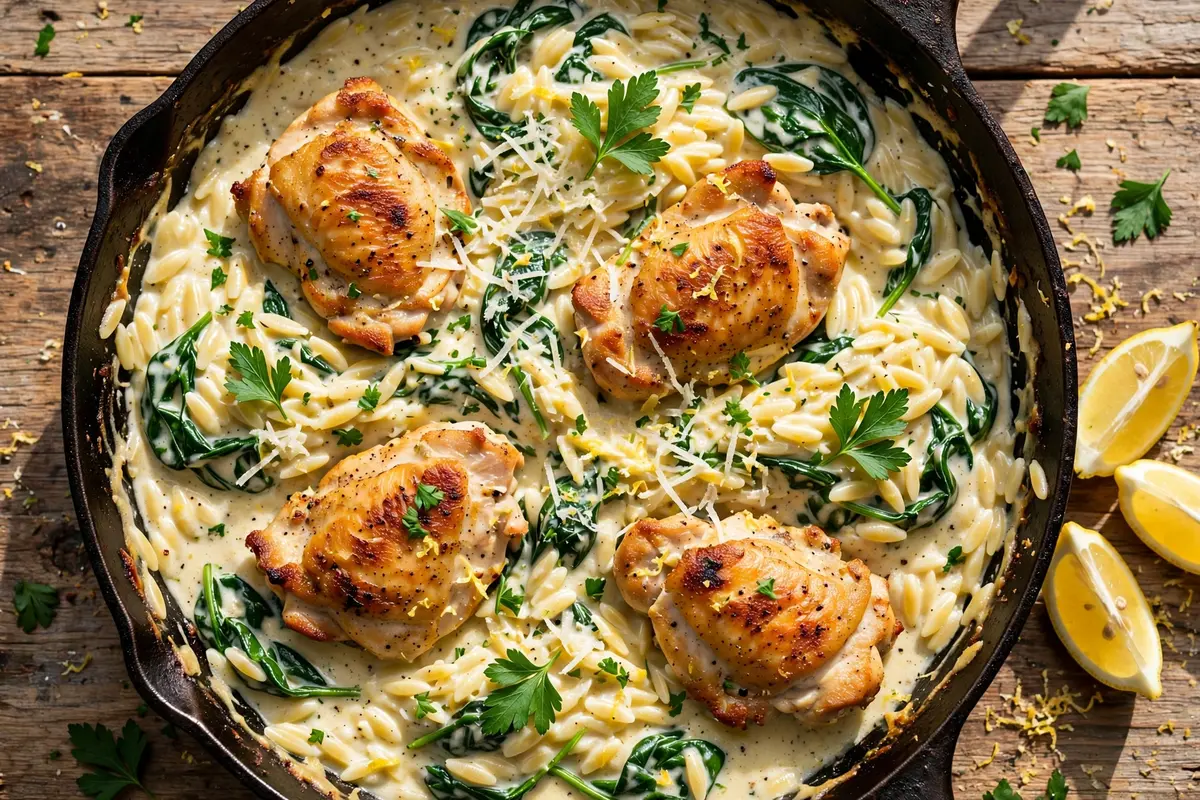
Most lemon chicken orzo recipes online ask for more than they admit. The top results want 45 minutes and a broiler, or a risotto-style routine where you stand at the stove adding broth half a cup at a time, or an oven finish for chicken that was supposed to be a weeknight dinner. This one-pan lemon chicken orzo does the whole job on the stovetop in about 30 minutes: chicken thighs sear first for real browning, the orzo toasts in the same pan and then cooks directly in the broth, and a lemon-Parmesan cream sauce comes together around both while baby spinach wilts in at the end. One pan, no oven, no broiler, no second pot.
The trick is the order. The chicken sears and comes out, so it never overcooks while the pasta cooks. The orzo toasts in the chicken fat before any liquid goes in, which gives it a nutty note and helps it hold its shape instead of turning gluey. And the cream and Parmesan go in last, off the fiercest heat, so the sauce turns silky instead of splitting. All times below are estimates, since cooking speed varies with your stove and pan.
Prep time: 10 minutes (estimate)
Cook time: 20 minutes (estimate)
Total time: 30 minutes (estimate)
Servings: 4
Difficulty: Easy
Why this lemon chicken orzo works
Orzo is the right pasta for a one-pan dinner because it behaves like rice: it cooks in the same liquid the chicken simmers in, and it releases just enough starch to thicken the sauce on its own. That is why this dish needs no separate saucepot and no flour. But orzo also has a failure mode — cooked too long or stirred too little, it clumps into a starchy mass. The method below prevents both problems: the orzo is toasted first, the broth goes in all at once, and the pan gets a stir every couple of minutes while the orzo simmers, scraping the bottom so nothing sticks.
Cutting the chicken thighs into pieces instead of searing them whole is what makes the 30-minute promise honest. Whole bone-in thighs need 18 minutes of searing plus an oven finish, which is exactly why the top search results run 45 minutes. Pieces sear in 6 to 7 minutes total, then finish in the orzo in another 3 to 4 minutes, and they pick up more browning per bite because more surface touches the pan. Thighs are the right cut here: they stay juicy through two rounds of heat, where breast would start drying out.
The lemon works in two places, and that is deliberate. Zest goes into the sauce early, where its oils bloom in the warm cream and perfume the whole pan. Juice goes in at the very end, off the heat, so its brightness stays sharp instead of cooking flat. If you add all the lemon at the start, the sauce tastes one-note and sour; split it this way and the dish tastes bright without being acidic.
Spinach goes in last for a practical reason, not just a pretty one. Three cups of baby spinach look like too much when they hit the pan, then wilt down to almost nothing in about a minute. Added any earlier, the spinach would overcook into dark ribbons and lose its color. Folded in at the end, it stays green and adds a fresh note that keeps the cream sauce from feeling heavy.
Ingredients
- 1½ lb boneless, skinless chicken thighs, cut into 1½-inch pieces
- 1 teaspoon kosher salt, divided
- ½ teaspoon freshly ground black pepper
- 1 teaspoon Italian seasoning
- 2 tablespoons olive oil
- 1 small yellow onion, finely diced (about 1 cup)
- 3 cloves garlic, minced (about 1 tablespoon)
- 1½ cups dry orzo pasta
- 3 cups low-sodium chicken broth
- ½ cup heavy cream
- ½ cup grated Parmesan cheese, plus more for serving
- 1 lemon, zested and juiced (about 2 tablespoons juice)
- 3 cups baby spinach (about 3 oz)
- ¼ teaspoon red pepper flakes (optional, for gentle heat)
- 2 tablespoons chopped fresh parsley, for garnish
A note on a few of these: use low-sodium broth, because the Parmesan and the broth both bring salt, and regular broth can push the sauce over the edge. Toast the orzo — do not skip that step — it is what keeps the pasta from clumping. Use a real lemon, not bottled juice: the zest is half the flavor here, and bottled juice cannot provide it. Baby spinach is the right green because it wilts in about a minute; mature spinach needs chopping and longer cooking, and frozen spinach would water down the sauce.
Instructions
- Pat the chicken pieces dry with paper towels and season evenly with ¾ teaspoon of the kosher salt, the black pepper, and the Italian seasoning. Zest the lemon, juice it, and set both aside. Dice the onion and mince the garlic so everything is ready before the pan gets hot — this dinner moves fast once it starts.
- Heat the olive oil in a large 12-inch skillet over medium-high heat until it shimmers, about 2 minutes.
- Add the chicken in a single layer with space between the pieces. Sear undisturbed for 3 to 4 minutes until deeply golden underneath, then flip and sear 3 minutes more. Transfer to a plate. If the pieces do not fit in one layer, sear in two batches — crowded chicken steams instead of browning.
- Reduce the heat to medium. Add the onion to the same skillet and cook for 2 to 3 minutes, stirring, until softened and translucent. Add the garlic and cook for 30 seconds, stirring constantly, just until fragrant. Do not let it brown.
- Add the dry orzo and stir for 1 to 2 minutes until the grains are coated in oil and smell faintly nutty, with a few grains turning golden at the edges.
- Pour in the chicken broth and the lemon juice, scraping up the browned bits stuck to the bottom of the pan with a wooden spoon. Bring to a gentle boil, then reduce the heat to medium-low and simmer, stirring every 2 minutes and scraping the bottom, for 8 minutes until the orzo is almost tender and most of the liquid is absorbed.
- Stir in the heavy cream, the Parmesan, and the lemon zest. Return the chicken to the skillet with any juices that collected on the plate, nestling the pieces into the orzo. Cover and cook for 3 to 4 minutes until the chicken is cooked through and the orzo is tender.
- Confirm doneness: the thickest piece of chicken should read 165°F (74°C) on an instant-read thermometer, with no pink inside. Color alone can mislead — the thermometer is the only reliable check.
- Remove from the heat. Fold in the baby spinach a handful at a time, stirring until it wilts, about 1 minute. Taste and adjust with the remaining ¼ teaspoon of salt if needed, and the red pepper flakes if using. Let the skillet rest for 2 minutes so the sauce thickens slightly, then shower with parsley and extra Parmesan and serve straight from the pan.
Tips for the best lemon chicken orzo
Stir the orzo on a schedule. Orzo sinks and sticks. A quick stir every 2 minutes while it simmers — scraping the bottom of the pan each time — is the difference between separate, tender grains and a starchy clump. Set a mental timer; do not wait until it looks stuck, because by then it is.
Do not add all the broth at once if your pan is small. This recipe is written for a 12-inch skillet. In a 10-inch skillet the orzo cooks in a deeper layer and can stick more easily; add the broth in two pours and stir a little more often. The total liquid stays the same.
Pull the chicken at 165°F, not beyond. Thighs are forgiving, but the pieces are small and the carryover heat in a hot skillet is real. The moment the thickest piece reads 165°F (74°C), the pan comes off the heat. The 2-minute rest finishes the sauce without overcooking the chicken.
Hold the lemon juice until the end. The juice goes in with the broth in step 6, which is early enough to season the orzo but late enough — after the sear, in liquid — that it does not turn harsh. If your lemons are very tart, hold back a teaspoon of juice and add it at the end to taste instead.
Substitutions and variations
Chicken breast: works if that is what you have. Cut it into the same 1½-inch pieces, sear a minute less per side, and watch the final simmer closely — breast dries out faster than thigh, so pull it the moment it hits 165°F (74°C). Our 30-minute one-skillet chicken piccata is the breast-based lemon chicken on this site if you prefer that cut.
No heavy cream: half-and-half works in the same amount, though the sauce will be a little thinner — let it simmer an extra minute before the spinach goes in. Do not use milk: it is more likely to split in a hot, acidic pan with lemon juice already in it.
Other greens: chopped kale needs 3 to 4 minutes to soften, so add it with the chicken in step 7 instead of at the end. Arugula wilts like spinach and adds a peppery note — use the same amount, folded in off the heat.
Add vegetables: a cup of frozen peas stirred in with the spinach adds color and sweetness, and a cup of halved cherry tomatoes added with the onion gives the sauce a little more body. Keep the total additions modest, or the orzo will not have enough liquid to cook properly.
What to serve with lemon chicken orzo
This is a complete one-pan dinner on its own — protein, pasta, and a vegetable in the same skillet — so it needs nothing more than a simple side. A green salad with a sharp vinaigrette is the best match: the acid cuts the cream sauce and the crunch contrasts with the soft orzo. Crusty bread is the other natural partner, for the sauce left in the pan.
If you like the one-pan pasta format, the creamy one-pan chicken and gnocchi bake is the richer, oven-finished cousin of this dish, and the one-pan balsamic chicken and Brussels sprouts skillet builds its sauce from the pan fond the same way, with a sweet-tart flavor instead of bright lemon. For another lemon chicken, the chicken piccata is the classic caper-and-butter version.
Storage and reheating
Refrigerator: cool to room temperature (no more than 2 hours on the counter), then store in an airtight container for up to 3 days. The orzo will absorb sauce as it sits — this is normal for any pasta cooked in its sauce.
Freezer: not recommended. The cream sauce separates when frozen and reheated, and the orzo turns soft. This is a 30-minute dinner — it is faster to cook fresh than to thaw and fix.
Reheating: warm gently in a skillet over medium-low heat with a splash of chicken broth, 2 to 3 tablespoons per serving, stirring until the sauce loosens and the chicken is heated through. The microwave works in a pinch: heat in 60-second bursts at 70% power, stirring between bursts, with a splash of broth.
Make-ahead: cut and season the chicken, dice the onion, mince the garlic, and zest the lemon up to a day ahead, storing each separately in the refrigerator. Cook just before serving — the orzo is at its best in the first 20 minutes after it leaves the heat.
Lemon chicken orzo FAQ
Why is my orzo sticky or clumpy? Almost always one of two things: it was not toasted before the liquid went in, or it was not stirred while it simmered. Toasting coats the grains in oil and helps them stay separate; stirring every 2 minutes keeps them from settling and sticking to the bottom. A 12-inch skillet also matters — a smaller pan crowds the orzo into a deeper layer that sticks more easily.
Can I use chicken breast instead of thighs? Yes. Cut breast into the same 1½-inch pieces and sear a minute less per side. Watch the final simmer closely and pull the pan the moment the thickest piece reads 165°F (74°C) — breast dries out faster than thigh in a hot skillet.
Can I make this without heavy cream? Half-and-half works in the same amount, with a slightly thinner sauce. Do not use milk: with lemon juice already in the pan, milk is more likely to split. If you want it lighter, use half-and-half and an extra 2 tablespoons of Parmesan to bring back some body.
Do I really not need the oven? Correct — this is a fully stovetop recipe. That is the point of it: the top search results for lemon chicken orzo mostly need a broiler or an oven finish, and this version is built to skip that step entirely. A 12-inch skillet and a lid are the only equipment.
Can I double this recipe? Not in one pan — a doubled batch crowds the skillet, the chicken steams instead of searing, and the orzo sticks. For 8 servings, cook two separate batches, or use a very large 14-inch skillet or a wide Dutch oven and add about 3 minutes to the orzo simmer, stirring more often.
What if the sauce is too thick or too thin? Too thick usually means the orzo absorbed more liquid than expected — stir in a splash of warm chicken broth, a tablespoon at a time, off the heat. Too thin means the orzo needs another minute or two of simmering, or the cream went in while the pan was too cool — let it bubble gently for 1 to 2 minutes and it will tighten up.
Nutrition (estimated, per serving, serves 4): about 650 calories, 30g fat, 55g carbohydrates, 36g protein. Calculated from ingredient label values; actual numbers vary with the exact chicken cut, oil absorbed, and Parmesan used.Recipe card
One-Pan Lemon Chicken Orzo (30 Minutes)
Prep time: 10 minutes (estimate)
Cook time: 20 minutes (estimate)
Total time: 30 minutes (estimate)
Servings: 4
- 1½ lb boneless, skinless chicken thighs, cut into 1½-inch pieces
- 1 tsp kosher salt, divided; ½ tsp black pepper; 1 tsp Italian seasoning
- 2 tbsp olive oil
- 1 small yellow onion, finely diced; 3 cloves garlic, minced
- 1½ cups dry orzo pasta
- 3 cups low-sodium chicken broth
- ½ cup heavy cream; ½ cup grated Parmesan, plus more for serving
- 1 lemon, zested and juiced (about 2 tbsp juice)
- 3 cups baby spinach; ¼ tsp red pepper flakes (optional); 2 tbsp chopped fresh parsley
- Pat chicken dry; season with ¾ tsp salt, pepper, and Italian seasoning. Zest and juice the lemon; dice the onion; mince the garlic.
- Heat olive oil in a 12-inch skillet over medium-high heat until shimmering, about 2 minutes.
- Sear chicken in a single layer 3–4 minutes per side until deeply golden. Transfer to a plate.
- Reduce heat to medium. Cook onion 2–3 minutes until softened; add garlic and cook 30 seconds until fragrant.
- Add orzo; stir 1–2 minutes until coated and faintly nutty.
- Pour in broth and lemon juice; scrape up the browned bits. Simmer, stirring every 2 minutes, for 8 minutes until the orzo is almost tender.
- Stir in cream, Parmesan, and lemon zest. Return chicken with its juices; cover and cook 3–4 minutes until the chicken reads 165°F (74°C) and the orzo is tender.
- Remove from heat; fold in spinach until wilted, about 1 minute. Season with remaining ¼ tsp salt if needed. Rest 2 minutes, then top with parsley and extra Parmesan and serve.
Related recipes
If you liked this one-pan dinner, try the 30-minute one-skillet chicken piccata for another bright lemon chicken; the creamy one-pan chicken and gnocchi bake for the richer pasta version; or the one-pan balsamic chicken and Brussels sprouts skillet, which builds its sauce from the pan fond the same way.